


Category
Strategic SourcingDate Posted
December 29, 2025What is Sourcing? Definition, Process, and Best Practices
Summary: This guide shows you everything about sourcing from a buyer’s view. We’ll explain what it means, how it’s different from procurement, and walk through the various types and steps. You’ll discover the perks, smart practices, and modern ways that help organizations build strong supply chains that won’t break the bank.
Introduction
The main goals of sourcing have stayed the same: find trustworthy suppliers who deliver quality goods fast and at a fair price. But today’s business world is trickier than ever. Digital changes give us speed and smarts we never had before. Yet they also make competition fiercer and give customers more choices.
Now, companies must also handle challenges around being green, doing the right thing, and dealing with global ups and downs. Since sourcing happens early in the supply chain, it sets up everything that follows. When you do sourcing right, you create supply chains that work like clockwork. This means your operations run smooth and customers get what they want when they want it.
What is Sourcing?
At its heart, the main sourcing definition is finding, checking out, and working with suppliers to get the goods and services your business needs. It covers every step of hunting for possible suppliers and picking the best one who gives you the most value. This isn’t just about making deals. It’s a smart business move that directly touches your costs, quality, and whether your products are available when needed.
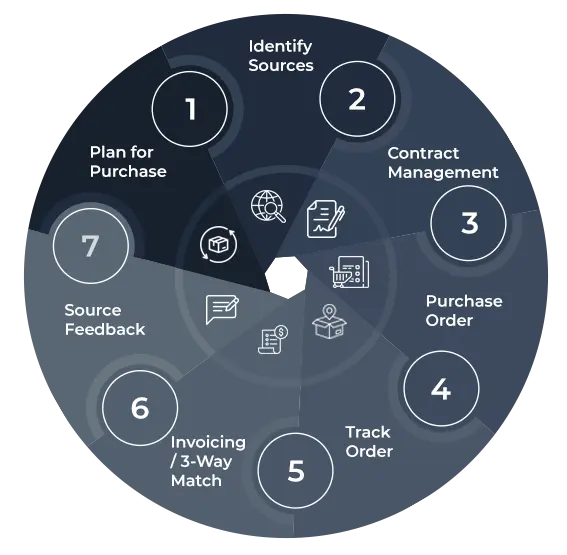
When you use sourcing well at both day-to-day and big-picture levels, it creates real value. You secure the right suppliers at the lowest total cost, which gives you an edge over competitors.
People often mix up sourcing with “procurement,” but they’re different things. Sourcing comes first in the bigger procurement picture. To really get the sourcing meaning, think of it as finding the “who” (the suppliers) that builds your supply network. Procurement is about the “what” (getting the actual goods and services).
Sourcing adds a layer of smart homework. It focuses on market research, checking suppliers, and negotiating to build strong relationships and good contract terms. Simply put, sourcing makes the flow of supplies possible. Procurement aims to make that flow work better.
Key Features of Sourcing
To fully define sourcing, you need to understand what it actually does. These tasks are key for building a supply chain that can handle bumps and work efficiently.
Market Research and Analysis
Supplier Finding and Checking
Negotiation and Making Contracts
Relationship Management
Types of Sourcing
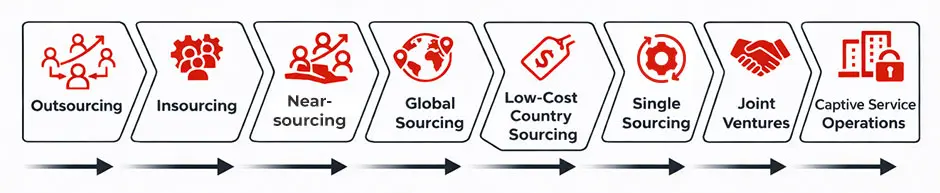
Companies can use different sourcing models based on their business plan, what resources they need, and the risks involved. Most modern businesses mix these approaches to handle complex challenges. Understanding each sourcing type helps procurement teams create a flexible and effective plan.
1. Outsourcing: This means hiring an outside supplier, either in your country or abroad, to do services or make goods that you used to handle yourself. It can cut costs and give you access to special skills.
2. Insourcing: The flip side of outsourcing. Insourcing uses your own internal teams and resources to handle supply chain work. This gives you more control over how things get done and quality levels. It’s often a way to reduce costs too.
3. Near-sourcing (or Nearshoring): This plan means moving sourcing activities closer to where you sell your final products. It helps cut shipping costs, makes delivery times shorter, and makes talking with suppliers easier.
4. Global Sourcing: This involves getting goods and services from suppliers in other countries. You do this to access lower production costs, new tech, and skills you can’t find at home.
5. Low-Cost Country Sourcing (LCCS): A specific type of global sourcing. LCCS focuses on getting materials from countries where labor and production costs are much lower. This reduces your overall operating costs.
6. Single Sourcing: This means picking one supplier for all your needs of a particular item or service, even when other suppliers are available. It can make your supplier relationship stronger and give you more bargaining power.
7. Joint Ventures: A partnership between two or more companies to share resources, risks, and control. This can increase your bargaining power and limit supply chain risk by combining strengths.
8. Captive Service Operations: This means setting up a completely owned subsidiary overseas to handle specific business functions. It gives you more control over keeping things confidential and secure.
Benefits of Using Sourcing
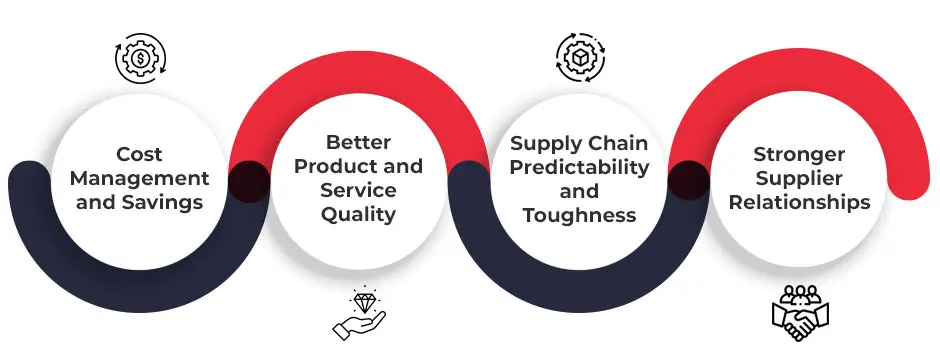
When you do sourcing right, it delivers real advantages that go way beyond just cutting costs. It’s a strategic tool that makes your whole supply chain stronger and improves your competitive position. Done well, strategic sourcing helps your brand image and creates lasting customer loyalty.
Cost Management and Savings
Better Product and Service Quality
Supply Chain Predictability and Toughness
Stronger Supplier Relationships
Sourcing Best Practices
To get the most out of your sourcing process, companies should follow several key smart practices. These help build strong supplier relationships and create long-term success for everyone involved.
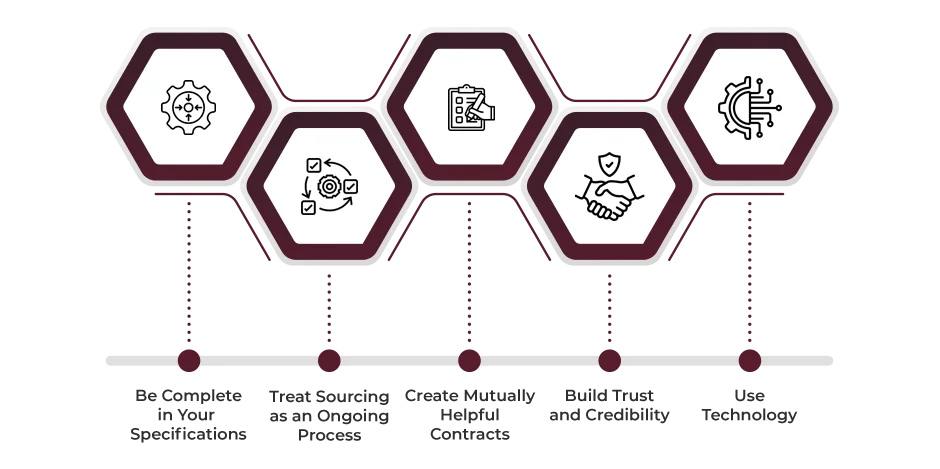
Be Complete in Your Specifications
Treat Sourcing as an Ongoing Process
Create Mutually Helpful Contracts
Build Trust and Credibility
Use Technology
Sourcing Strategies
An effective sourcing strategy aligns procurement activities with your company’s long-term goals. It requires a proactive and complete approach. You move beyond short-term cost-cutting to focus on total value. A key difference lies between tactical and strategic sourcing.
Strategic Sourcing vs. Tactical Sourcing
Strategic sourcing is a comprehensive, long-term approach that continuously looks at all sourcing activities. It aims to decrease supply chain risk and build strong partnerships. It considers factors like supplier quality, reliability, and sustainability. It requires detailed market research, spend analysis, and solid supplier relationship management.
Tactical sourcing, in contrast, is short-term focused and reactive. It puts immediate needs first, aiming to achieve the lowest possible price with a quick turnaround. While it can work for less complex, non-critical purchases, it often misses opportunities for long-term value creation and relationship building.
How to Create a Sourcing Strategy
Creating a solid sourcing strategy involves several important steps:
1. List and Specify Needs: Create a detailed list of all resources, goods, and services that need sourcing. Consider both present and future requirements.
2. Analyze Current Sourcing Activities: Document your current sourcing model. Include who your suppliers are, how they’ve performed, and how much you’re spending.
3. Check the Market: Do thorough market research and competitor analysis. Understand industry trends, economic factors, and your company’s position in the market.
4. Set Goals and Pick a Model: Define specific goals and KPIs. Based on how critical the goods or services are, choose an appropriate sourcing model. For example, single-sourcing for critical components, multi-sourcing for commodities.
5. Create an Action Plan: Make a roadmap for implementing changes. This might include recruiting new staff, evaluating new vendors, or phasing out products that no longer add value. Modern tools for Purchase Requisition management can help start this process with clarity and control.
6. Review and Improve: Continuously monitor performance through data analysis. Make sure your sourcing process stays efficient, competitive, and tough.

The Sourcing Process
While every company is unique, a successful sourcing process typically follows a structured set of steps. This methodical approach ensures all decisions are data-driven and aligned with company objectives. The second sourcing definition often ties to this very process of methodical supplier selection.
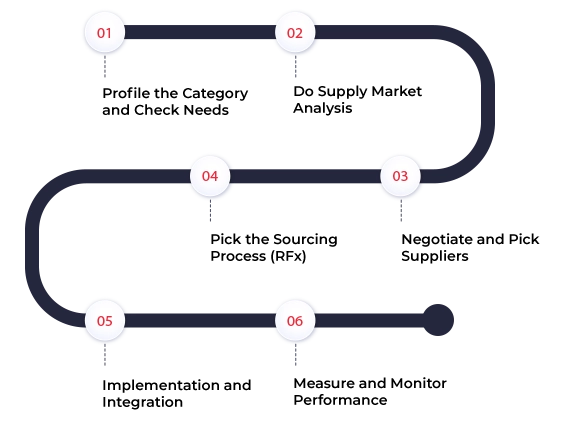
1. Profile the Category and Check Needs: The process starts by identifying the sourcing category and figuring out your company’s specific needs. This includes the quantity and types of products or services required. This step defines the scope and objectives.
2. Do Supply Market Analysis: Perform a market analysis to understand your buying power and the supplier landscape. Tools like Kraljic’s Matrix can help segment products based on risk and profitability to inform your strategy.
3. Pick the Sourcing Process (RFx): Ask for bids from potential suppliers using documents like a Request for Proposal (RFP), Request for Quotation (RFQ), or Request for Information (RFI). A clear and detailed RFx document is crucial for receiving comparable and relevant proposals. Effective RFx Management software can automate and standardize this step, ensuring consistency.
4. Negotiate and Pick Suppliers: Look at the proposals you received against your predefined criteria. Shortlist the most promising suppliers and enter into detailed negotiations to finalize terms, pricing, and delivery schedules.
5. Implementation and Integration: Once you choose a supplier, formalize the agreement with a legally binding contract. Involve the supplier in implementation discussions to ensure they’re fully integrated into your processes and systems.
6. Measure and Monitor Performance: Continuously monitor supplier performance through regular audits, KPI tracking, and feedback sessions. This lets you identify any problems quickly and ensure the supplier is meeting agreed-upon standards.
This structured approach helps to define sourcing not just as a task, but as a strategic cycle of continuous improvement.
Example of Sourcing
To show the sourcing process in action, think about a smartphone maker. The company needs to source various parts like microchips, screens, batteries, and cases from different suppliers worldwide.
Its sourcing team would first identify the technical specs for each part. Then, they’d do global market research to find suppliers known for quality and reliability in the electronics industry. They’d send RFPs to a shortlist of potential suppliers, detailing their requirements for quality, volume, and delivery timelines.
After looking at the proposals and negotiating contracts, the manufacturer establishes partnerships. This ensures a steady supply of high-quality components at competitive prices, which is fundamental to the final product’s success.
Common Use Cases
Sourcing is a critical function across virtually every industry. However, how it’s applied varies based on specific needs and market dynamics. Here are some common use cases:
-
Manufacturing: Streamlining the procurement of raw materials, components, and machinery to optimize production lines and manage costs.
-
Construction: Managing complex bids for subcontractors, sourcing bulk materials like steel and concrete, and procuring heavy equipment.
-
Healthcare: Optimizing the procurement of medical supplies, pharmaceuticals, and advanced diagnostic equipment while ensuring compliance with strict regulatory standards.
-
Retail: Sourcing finished goods for inventory, managing private label manufacturing, and procuring store supplies and operational services.
-
Energy: Efficiently sourcing specialized equipment and services for oil, gas, and renewable energy projects, often in challenging and remote environments.
-
Government: Conducting transparent and fair tendering processes for public services, infrastructure projects, and defense contracts, following strict procurement regulations.
How to Choose the Right Sourcing Software
Picking the right sourcing software is crucial for optimizing the procurement process. The right technology can automate manual tasks, provide deep insights, and enhance collaboration. The third sourcing meaning in a modern context often links with the digital tools that enable it.
When evaluating solutions, consider these key features:
-
Cloud Deployment: A cloud-based solution offers scalability, flexibility, and remote access. This is essential for modern, geographically spread teams.
-
Process Management Workflows: The software should provide robust and customizable workflows to automate sourcing activities. This ranges from supplier onboarding and qualification to contract awards. Systems offering powerful eAuction Management can drive competitive tension and maximize savings.
-
Complete Supply Chain Insights: Look for a solution that offers a 360-degree view of supply chain activities. It should integrate smoothly with existing ERP and business systems. This is one of the key benefits of sourcing software.
-
Advanced Analytics and Reporting: Real-time tracking of performance, trend identification, and sustainability monitoring from a single dashboard are essential for data-driven decision-making.
-
Collaboration and Communication Tools: The software should make seamless collaboration with suppliers on documentation, reporting, and compliance easy. Strong Supplier Management capabilities are a must.
-
Itemized Bidding: For complex purchases, the ability to conduct line-by-line auctions can drive significant savings. Platforms that support Itemized Bidding allow for greater transparency and competition on individual components of a proposal.
Challenges and Things to Consider
While effective sourcing offers huge benefits, companies must also navigate several challenges. Being aware of these potential hurdles is the first step toward handling them.
Long Sourcing and Onboarding Processes
Drop in Quality of Goods
Contract Risks
Supplier Over-Dependence
The final sourcing definition can be seen as a risk management function. Overcoming these challenges is key to its success.
Trends in Sourcing
The field of sourcing constantly evolves, driven by technology, market dynamics, and changing customer expectations. Staying ahead of these trends is vital for maintaining a competitive edge.
- Focus on Risk Management and Flexibility: The COVID-19 pandemic highlighted how vulnerable global supply chains can be. As a result, toughness and adaptability are now top priorities. Companies are designing better backup plans, diversifying their supplier base, and using technology to handle risks more effectively.
- Sustainable and Responsible Sourcing: There's a growing demand for transparency and ethical practices. Consumers and investors alike put sustainability first, forcing companies to include social and environmental considerations into their sourcing decisions. This includes local sourcing, selecting suppliers with shared values, and moving toward circular supply chains. A different sourcing type, impact sourcing, is also gaining ground as companies aim to create positive social outcomes.
-
Digital Change and AI: The adoption of AI, automation, and advanced analytics is transforming sourcing. These technologies enable more efficient data analysis, automate repetitive tasks, and provide predictive insights. This allows procurement teams to focus on strategic initiatives. The many benefits of sourcing software are amplified by these intelligent capabilities.
Conclusion
Sourcing has grown from a simple purchasing function into a strategic pillar of modern business. It’s a dynamic and many-sided process that requires a delicate balance of cost, quality, and risk management.
By adopting a strategic mindset, embracing technology, and committing to ethical practices, companies can transform their sourcing operations. They move from a cost center into a powerful engine for value creation.
A clear understanding of the final sourcing meaning—as a strategic, data-driven, and relationship-focused discipline—is the key to unlocking its full potential. This builds a supply chain that’s not only efficient but also tough and responsible.
Frequently Asked Questions
Lorem ipsum dolor sit amet, consectetur adipiscing elit. Ut elit tellus, luctus nec ullamcorper mattis, pulvinar dapibus leo.
 17th, June 2026 | 12:00 PM EST
 30 Min + Q&A