


Category
RFx & Bid ManagementDate Posted
February 27, 2026Summary
| Estimate | A structured approximation of expected cost and scope, used to align internally before you invite suppliers. | Best when info is incomplete, and you still need direction. |
| Proposal | A supplier-facing plan of how work will be done, with assumptions, timelines, and commercial terms, not just a number. | Best when the solution and approach matter. |
| Bid | A formal offer against a defined requirement, submitted in a competitive process, often comparable across vendors. | Best when you need apples-to-apples competition. |
| Quote | A price with a validity window, commonly used when inputs (like materials) can change quickly. | Best when scope is clear and pricing must be locked for a period. |
| Tender | The overall competitive procurement opportunity and process, where buyers publish requirements and suppliers respond. | Best thought of as the “container” that bids and proposals sit inside. |
Procurement cycles feel slow because the basics get mixed up. Even benchmarks show it: APQC reports a 2.0‑day median from requisition received to PO released (APQC benchmark). In public programs, average procurement turnaround has been measured at 88 days (World Bank evaluation). If you confuse bid vs proposal, you slow decisions, and you invite disputes later.
1) Why Do These Terms Get Confused, and Why Does It Matter?
It gets confused because different industries reuse the same words, and teams use them as shortcuts. A “proposal” can mean “our full solution,” or it can mean “our price sheet,” depending on who is speaking.
The cost of confusion is not just wording. It changes behavior. It changes who approves what, when suppliers respond, and how you defend the final decision if someone challenges it.
What usually goes wrong
- Internal teams treat an estimate like a promise, then get stuck when scope changes.
- Suppliers treat a bid like a negotiation, and you lose comparability.
- Evaluators compare “plans” against “prices” and call it a fair scoring.
What you gain by using the right term
- Cleaner approvals and faster movement from need to sourcing event.
- More consistent supplier responses, fewer clarification loops.
- Audit-ready traceability in case of internal or external scrutiny.
What Does the Pricing Lifecycle Look Like, End to End?
Think of sourcing as a lifecycle, not a single document. In real work, estimating and bidding is a chain of small decisions. If you skip a link, you feel it later as rework, supplier churn, or governance escalations.

Many industries separate cost-focused bid estimates from solution-focused proposals.
The buyer’s lifecycle
- Need → user raises a request and explains what they want.
- Estimate → you create a bid estimate to check feasibility, budget, and assumptions.
- RFx → you invite suppliers with clear requirements and response fields.
- Supplier response → you get proposals and bids, depending on what you asked for.
- Evaluation → you score, clarify, and shortlist, with a traceable rationale.
- Award → you decide, document, and move to contracting / PO execution.
Estimate vs bid is not about “which is better.” It is about where you are in the lifecycle, and what level of commitment you need.
What is An Estimate in a Sourcing Context?
An estimate is your internal cost-and-scope approximation. It exists so you can decide: “Should we source this now, and if yes, what boundaries do we set?”
In practice, buyers often start with an early estimate, then refine it into a bid estimate once requirements get clearer. That refinement is not busywork. It is how you avoid false precision later.
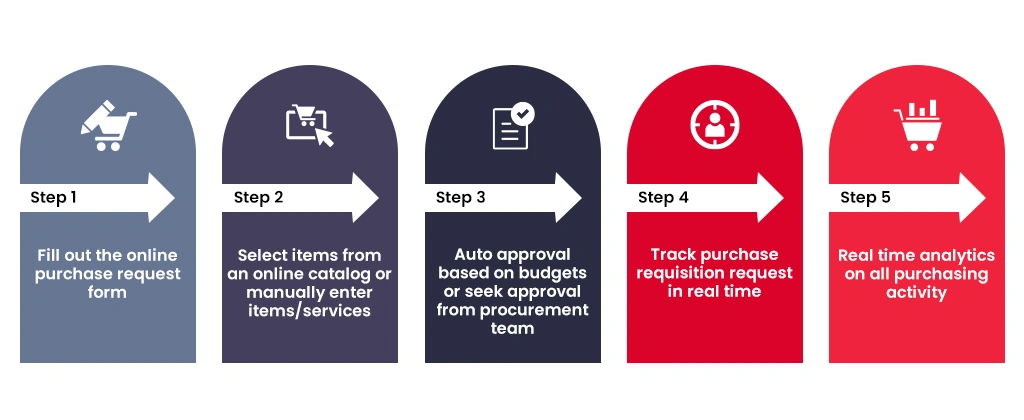
Estimates become stronger when request intake and approvals are structured.
What an estimate should include
- What is in scope, and what is explicitly out of scope.
- Assumptions (site access, lead times, service windows, volumes).
- Cost drivers (labor, materials, logistics, overhead, risk buffer).
- What approvals are needed before you publish an RFx.
What an estimate should NOT pretend to be
- A signed commitment from a supplier.
- A final price that can survive requirement changes.
- A scoring baseline if you have not locked criteria yet.
Want a clearer requisition-to-estimate flow that reduces rework across every stakeholder group?
What Makes a Proposal Different from An Estimate?
So, what’s the difference between an estimate and a proposal? A proposal is a supplier-facing document. It explains the “how,” not just the “how much.” It usually combines scope, timeline, dependencies, and commercial terms, so both sides can align before award.
Buyers get value from proposals when the solution matters, not only the price. That is why proposal evaluation often includes criteria like capability, methodology, timeline, and risk controls, not only cost.
What a strong proposal answers
- What exactly will be delivered, and how will it be managed.
- What changes the price (scope triggers, assumptions, optional items).
- What the supplier needs from you (access, data, approvals, timelines).
- What “done” looks like (acceptance criteria and measurable outcomes).
This is where teams feel the difference between estimate vs proposal in a very practical way.
Also, you will hear people talk about proposal vs estimate vs quote. A quote is usually a fixed price for a defined scope, often with an expiry window. A proposal can include pricing options and assumptions.
To keep proposals comparable, buyers increasingly structure response fields and scoring. Some teams also rely on requirement-to-response alignment so evaluators can focus on decisions, not document hunting.
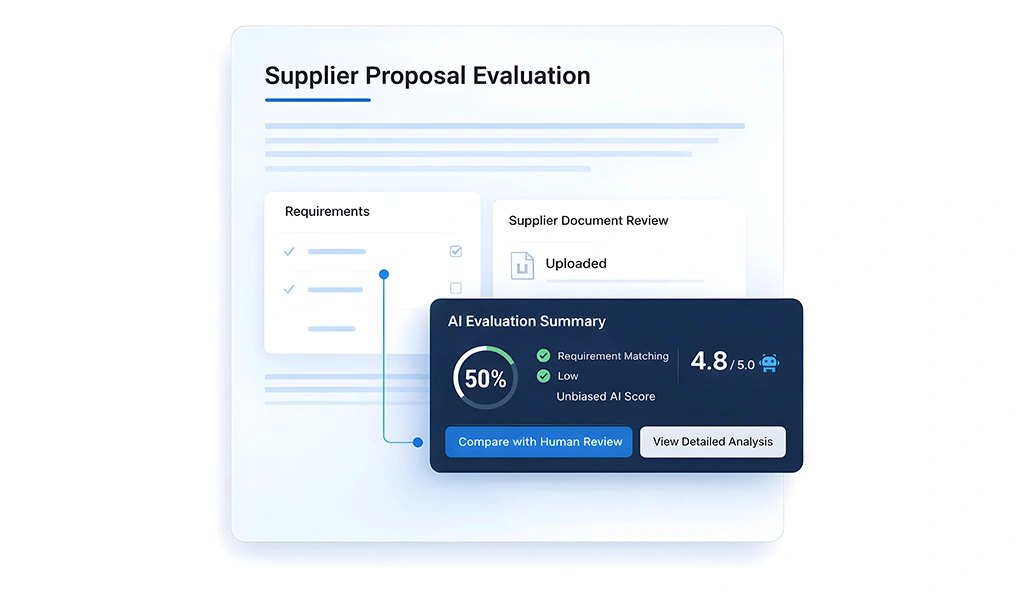
Need faster proposal reviews with defensible scoring, without turning your process into paperwork?
What is a Bid, And What is It Not?
A bid is a formal offer submitted against a defined requirement. It is meant to be comparable across suppliers, because the buyer sets the rules, the scope, and the response format.
This is why bid vs estimate matters. A bid is a supplier’s commitment to deliver for a stated price and scope. An estimate is your internal approximation to decide if and how to run the event.

A bid is strongest when
- Specs are stable and can be “locked” for fairness.
- You want apples-to-apples comparisons.
- Line items matter (price, lead time, delivery, compliance).
A bid becomes messy when
- Scope keeps moving after publishing.
- Suppliers submit different formats, making evaluation subjective.
- You rely on email threads for clarifications and version control.
Many buyers reduce confusion in bid vs proposal by structuring bids as item-level responses. For example, line-item pricing clarity helps you compare offers without guessing what is included.
Want cleaner bid comparisons that reduce clarification churn and shorten internal review time?
Proposal vs Bid: What is the Critical Difference?
Here is the simplest distinction. A bid is built to be compared. A proposal is built to be understood. That is why the same supplier might send a proposal-style narrative, and also submit a bid-form price sheet.
The practical confusion shows up as bid vs proposal in meetings, when someone asks, “Are we choosing the lowest number, or the best plan?” If your solicitation is unclear, suppliers guess, and evaluators drift.
Quick signal: which one are you running?
- If the buyer controls a fixed response template, you are closer to a bid process.
- If the supplier controls the structure and persuasion, you are closer to proposal-led selling.
This is not theory. It affects how you set deadlines, what clarifications are allowed, and how you document fairness.
Many teams separate “bid management” from “proposal writing” because the work is different.
When Should You Use Which, And How To Decide Fast?
Buyers do not need more theory. You need a shortcut. Use this if you are stuck between estimate vs bid, or you are dealing with a mixed internal expectation.
Quick signal: which one are you running?
- You still need approvals or budget alignment.
- You are validating feasibility and assumptions.
- You are not ready to lock scope yet.
Use a proposal when…
- Approach, methodology, and risk management matter.
- You need options and trade-offs, not one number.
- You need clear dependencies and responsibilities.
Use a bid when…
- Requirements are precise and comparable.
- You want competitive tension across suppliers.
- You need item-level responses for fair scoring.
What about a bid estimate?
- A bid estimate is the “bridge” between internal planning and external competition. It is detailed enough to publish, but it still recognizes assumptions and risks.
If you are deciding between bid vs estimate, ask one question: “Can we define specs with enough precision to keep the process fair?” If yes, bid. If not, start with estimate refinement and move forward.
Knowing when to use each document reduces friction for both buyers and suppliers.
How do you evaluate supplier responses without losing fairness or speed?
Evaluation is where good intent can still fail. If documents are inconsistent, people start “reading between the lines.” That is where bias and confusion creep in, even if no one wants it.
A clean evaluation has three parts: clear criteria, traceable scoring, and a process that prevents post-deadline edits. This matters in bids, and it matters in proposals too.
Two evaluation models buyers actually use
- Multi-criteria scoring: cost + capability + timeline + approach (common in proposals).
- Competitive live bidding: structured events where suppliers revise prices under rules (common in e-auctions).
The OECD describes e-auctions as real-time, anonymous competition where suppliers revise prices downward, and notes they fit when specifications are precise (OECD guidance).
Evaluation becomes faster when competition, rules, and reporting are built into the event.
Want evaluation that stays defensible, reduces back-and-forth, and keeps supplier trust intact?
What Common Mistakes Do Businesses Make in Estimating and Bidding?
Most mistakes are not “bad procurement.” They are mismatched documents for the stage you are in. You start with one intent, and end up running a different process.
Common mistakes, and what to do instead
Mistake: treating a bid estimate like a fixed commitment.
Mistake: letting specs change after publish.
Mistake: comparing proposals without a scoring model.
Mistake: running estimate vs bid debates in late-stage meetings.
When this is done well, bid estimate quality improves, and supplier participation rises naturally.
The words overlap, but the intent and commitment level change.
Final Takeaway
Bid, proposal, and estimate are not paperwork labels. They are control points. Estimate sets direction, proposal sets expectations, bid sets commitment, and evaluation protects fairness.
When your team aligns these steps, estimating and bidding stop being stressful, and sourcing becomes repeatable. The best outcomes come from clean inputs, clear rules, and traceable decisions every time.
Even in service industries, clarity on document purpose protects both buyers and suppliers.
Frequently Asked Questions
Lorem ipsum dolor sit amet, consectetur adipiscing elit. Ut elit tellus, luctus nec ullamcorper mattis, pulvinar dapibus leo.
 17th, June 2026 | 12:00 PM EST
 30 Min + Q&A