


Category
Strategic SourcingDate Posted
April 8, 2026Adapting to industrial changes requires deep internal teamwork, exceeding standard daily operations.
Forward-thinking businesses secure future infrastructure by executing smart capex sourcing. Companies grow faster, scale smarter, and handle supply chain disruptions better than competitors when they master major investments. Here is how you build success.
Executive Summary
Comprehensive guides like ours break down core elements of winning capex procurement strategy. We examine real differences between capital and operational spending, sharing proven five-step frameworks.
Core Takeaways:
-
Avoiding common mistakes and aligning buying teams boosts operational efficiency up to 25%.
-
Navigating complex itemized bidding and multi-stakeholder evaluations ensures accurate supplier selection.
-
Practical checklists, risk management steps, and market-tested best practices optimize long-term asset investments and supplier relationships.
What Is CapEx Sourcing
Understanding financial sourcing meaning requires looking at how businesses acquire critical assets. Capital expenditure sourcing targets acquiring long-term physical assets used over multiple years.
Assets in Focus: Consider heavy manufacturing machinery, real estate, vehicle fleets, and permanent tech setups. Because significant capital is involved, capex sourcing demands careful planning and strong executive support.
Unlike buying basic office supplies or paying monthly software subscriptions, capital purchases shape corporate futures. Choices made here lock businesses into specific operating paths for decades.
Long-Term Impact: Bad calls hurt more than quarterly budgets. They limit corporate capabilities for years. Strong capex procurement strategy stops long-term bottlenecks, ensuring organizations build reliable foundations.
Teams often confuse capital expenses with operational expenses. Understanding clear boundaries between both concepts is step one toward better financial control.
Accounting Differences: Capital expenses land on balance sheets and lose value over time through depreciation. Operational expenses hit profit and loss statements immediately. Let us break down exact differences.
CapEx vs OpEx Key Differences
| Characteristic | Capital Expenditure (CapEx) | Operational Expenditure (OpEx) |
|---|---|---|
| Definition | Major investments in long-term physical or digital assets. | Day-to-day expenses required running business operations. |
| Lifespan | Provides value for multiple years (typically 3 to 20+ years). | Consumed within current fiscal years. |
| Accounting Treatment | Recorded on balance sheets, depreciated over time. | Deducted fully in current tax years. |
| Approval Process | Needs board-level or senior executive sign-off. | Managed within everyday departmental budgets. |
| Examples | Factory equipment, property purchases, major server setups. | Monthly utility bills, payroll, standard maintenance contracts. |
Why CapEx Sourcing Matters for Business
Constant technological flow across industrial landscapes is massive. Keeping pace requires internal teams working together closely.
Modernizing Operations
Decades of procurement experience help professionals push for simpler workflows. We bring modern automation and advanced tech into heavy industry. Pulling off complex upgrades requires excellent capex sourcing.
Locking in right heavy machinery or facility upgrades at right prices directly boosts Return on Investment. Lower upfront costs combined with highly efficient equipment means businesses produce goods cheaper and faster.
Building Competitive Edges
Efficient purchasing creates compelling advantages. If competitors overpay for manufacturing lines that constantly break down, they simply cannot match product pricing or delivery speeds.
Cost control remains another huge factor. Capital projects are famous for going over budget. Structured capex procurement strategy puts strict financial guardrails in place.
Financial Guardrails Provides
Forced reviews of total cost of ownership rather than just initial sticker prices.
Long-term views ensuring businesses avoid bleeding cash on expensive maintenance contracts.
Protection against forced, unplanned equipment upgrades years down road.
Avoiding Future Penalties
Sourcing decisions drive sustainability and compliance goals. Modern infrastructure must meet strict environmental and safety rules. Buying cheapest assets often leads to heavy compliance fines later. Strategic approaches ensure purchased assets line up with global environmental standards and local labor laws.
The Anatomy of a CapEx Buying Committee
Capital projects rarely happen in vacuums. Major hurdles in capex procurement strategy involve getting decision-makers aligned across radically different priorities.
Building Buying Teams: Unlike routine buying handled by single category managers, long-term asset buying requires team effort. Managing competing scorecards between departments forms true challenge here. Operations demands maximum output while Finance demands rapid ROI. Smooth capex sourcing events mean bringing cross-functional groups together at step zero. Getting distinct groups aligned early ensures capex sourcing events avoid stalling at finish lines.
Key Committee Members:
-
Finance Team: Led by CFOs, they care about depreciation schedules, cash flow impact, tax details, and ROI timelines. They need procurement to prove tying up millions in physical assets makes more financial sense than alternative investments.
-
Operations and Engineering: Leaders focus on technical specs, machine output, safety standards, and reliability. If procurement buys assets looking great on spreadsheets but slowing factory floors, projects fail.
-
IT and Security: Today, almost all heavy machinery and facility setups connect to corporate networks. IT must check cybersecurity rules, software connections, and data hosting needs before anyone signs contracts.
-
Legal and Compliance: Legal teams look closely at liability, SLA terms, and regulatory rules, protecting businesses from external risks.
Common Mistakes in CapEx Procurement Strategy
Organizations often hit roadblocks before sending out first proposal requests. Fixing failures early allows teams to build much stronger foundations for capex procurement strategy.
Skipping Total Cost of Ownership Analysis
Buyers frequently look only at sticker prices. Machines might cost one million dollars upfront but need five hundred thousand dollars in special annual maintenance.
Hidden Costs: Alternative machines might cost one point five million upfront but run ten years with almost zero maintenance. Failing to map out total cost of ownership ruins long-term budget forecasts and drains company funds.
Operating in Departmental Silos
Capital purchases affect multiple departments. If procurement buys new server clusters without talking to IT security teams, those servers might fail internal compliance checks.
Cost of Misalignment: Buying factory equipment without asking floor engineers means equipment might not even fit physical workspaces. Working in silos guarantees expensive rework and massive frustration.
Reactive vs Proactive Sourcing
Waiting until old machines completely die before looking for replacements puts teams in tight spots. Buying in panic mode destroys negotiation leverage.
Planning Ahead: Companies pay premium prices for rush shipping and settle for less-than-ideal equipment just because inventory is available now. Excellent capex sourcing requires looking years ahead and planning replacements long before emergencies strike.
The 5-Step CapEx Procurement Strategy Framework
Standard purchasing frameworks fail during capital acquisitions. 5-Step CapEx Sourcing Frameworks guide enterprise teams through complex realities separating simple sourcing from true strategic asset acquisition.
Step 1: Needs Assessment and Business Case Development
Every major purchase must start with rock-solid business cases. Departments asking for assets must define exactly what they need and why they need it now.
Defining Scope: Business cases must outline expected return on investment, production capacity boosts, and exact timelines required rather than serving as simple wish lists.
Financial Projections: Financial analysts work closely with operations to project financial impact. They look at current production bottlenecks and calculate how new assets will fix them. If numbers do not show clear, lucrative paths to profitability or necessary compliance, capex sourcing projects stop here.
Step 2: Market and Supplier Research
Once business cases get green lights, teams look at global markets. Finding qualified vendors capable of delivering assets becomes priority one.
Evaluating Global Risk: This step involves looking at global supply chain risks, political stability, and currency exchange rates. Suppliers in unstable regions might offer lower prices, but risks of delivery failure might be too high.
Supplier Financial Health: Checking financial health of suppliers is crucial. Capital assets require long-term support. If manufacturers go out of business two years after buying equipment, finding replacement parts becomes nightmare fuel. Deep financial vetting protects capex procurement strategy from major supplier failures.
Step 3: Two-Envelope Tendering and Itemized Evaluation
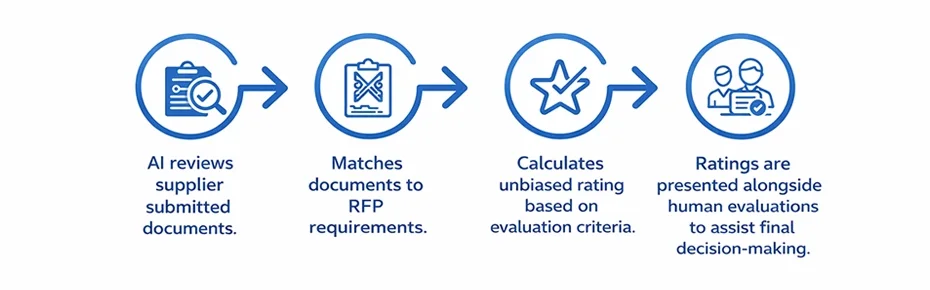
Standard RFPs fail here. Capital projects require separating technical evaluations from commercial pricing completely. Implementing Two-Envelope Systems ensures engineering teams score equipment capabilities blindly, preventing internal bias. Revealing supplier pricing too early ruins objective technical scoring.
Managing Massive BOQs: Building new facilities requires evaluating massive Bills of Quantities (BOQs). Comparing hundreds of line items across global suppliers breaks standard spreadsheets immediately. Procurement teams need platforms handling line-by-line itemized bidding natively. ProcureKey automatically manages and compares massive BOQs, locking commercial bids until technical scores are submitted.
Step 4: Clarification Cycles and Staged Approvals
Initial supplier bids never represent final offers. Complex machinery purchases demand intense clarification cycles and detailed vendor presentations. Suppliers submit technical questions, procurement provides public answers, and vendors adjust proposals accordingly. Managing back-and-forth Q&A securely is where standard sourcing falls apart.
Multi-Scorecard Alignment: Following presentations, cross-functional teams must consolidate different departmental scorecards into unified ratings. CapEx decisions require staged approvals across different authority levels. ProcureKey consolidates multiple stakeholder scorecards into one unified dashboard, capturing every single vendor clarification creating bulletproof, legally defensible audit trails.
Step 5: Asset Delivery, Commissioning and Review
CapEx sourcing processes do not stop when signing contracts. Procurement has to handle delivery logistics, which often involve complex international freight and customs paperwork.
Site Acceptance Testing: Once assets arrive, they go through site acceptance testing. Engineers push equipment hard ensuring it hits promised specs. Release final payments only after passing real-world tests.
Post-Project Review: Teams run post-project reviews to document lessons learned. Loops of continuous improvement make next capex procurement strategy runs even smoother.
Navigating Global Risk and ESG Compliance
Committing to vendors for multi-million dollar assets lasting fifteen years means political stability and environmental rules matter greatly. Solid capex procurement strategy looks at whole supply chains, not just final products.
Deep Supply Chain Mapping
Secondary suppliers providing crucial parts operating in sanctioned regions or breaking international labor laws force companies to carry legal and reputational risk. Elite capex sourcing requires deep supply chain mapping. Knowing exactly where raw materials originate and how they undergo processing before reaching main vendors is mandatory.
Environmental, Social, and Governance (ESG) criteria are no longer optional corporate buzzwords; they represent hard regulatory rules.
Demanding Transparency
Running capex sourcing means buyers must demand full transparency regarding equipment carbon footprints, energy use during peak operation, and end-of-life disposal plans. Companies ignoring environmental details often face massive retrofitting costs when new regional carbon taxes take effect.
The Impact of Digital Transformation on Capital Acquisitions
Relying on old spreadsheets and messy email threads to manage multi-million dollar investments begs for trouble. CapEx sourcing demands central digital setups built specifically for complex workflows.
Leveraging Modern Software: Modern procurement teams leverage advanced Sourcing software like ProcureKey to tame CapEx chaos. ProcureKey natively handles itemized BOQ comparisons and enforces Technical First, Commercial Later workflows seamlessly. Instantly seeing how five percent freight cost increases impact ten-year ROI models lets buyers negotiate from positions of real strength.
Building Trust: Managing vendor Q&A cycles through centralized platforms keeps communication fair and documented. Digital platforms provide clear audit trails holding multi-stakeholder scorecards. When board directors ask why specific vendors won, procurement leaders instantly pull up weighted scoring matrices proving transparent evaluation processes.
Measuring Success: Essential KPIs for Capital Projects
Improving unmeasured processes is impossible. After assets are in place and factory floors are running, knowing if capex procurement strategy actually worked is essential.
Tracking Right Metrics: Moving beyond basic price checks means tracking long-term, specific metrics. Teams need to measure:
-
Total Cost of Ownership (TCO) Variance: Compare expected TCO from original business cases against actual costs incurred over first three years of operation. If maintenance costs are double what vendors promised, sourcing strategy needs adjustment for future contracts.
-
Asset Utilization Rate: Are new machines running at promised ninety-five percent capacity, or sitting idle because they are hard to integrate? Procurement must follow up with operations ensuring purchased assets deliver expected value.
-
Sourcing Cycle Time: How many months passed between first needs assessments and final contract signatures? Trimming down cycle time without skipping due diligence is hallmark of excellent capex sourcing.
-
Supplier SLA Adherence: Track how often vendors meet promised maintenance response times. Falling short should automatically trigger financial penalties, keeping vendors accountable long after initial sales.
Best Practices in CapEx Sourcing
Making frameworks happen takes discipline. Best enterprise teams build specific habits keeping capital projects on track and under budget.
Creating Winning Habits: Putting strategic sourcing best practices into play separates top-tier organizations from rest of market.
Implement Strict Supplier Evaluation Criteria
Never rely on gut feelings or historic relationships alone. Build clear, numbers-based evaluation matrices.
Scoring Details: Score suppliers on environmental sustainability records, labor practices, and technical innovation. Buying assets meant to last twenty years requires suppliers actively investing in future-proof technologies.
Lock Down SLAs and Warranty Terms
Machines are only valuable when actually running. CapEx procurement strategy must insist on aggressive warranty terms.
Guaranteed Uptime: Demand guaranteed uptime percentages. Critical conveyor systems going down without suppliers sending technicians within twenty-four hours should trigger financial penalties. Contracts shift operational risk right back to vendors.
Conduct Thorough Site Acceptance Testing (SAT)
Never sign off on final payments until equipment undergoes thorough testing in actual operating environments.
Proving Assets: Factory Acceptance Testing (FAT) at vendor sites is good, but SAT proves assets work within specific setups. Make sure engineering teams push assets to limits before accepting delivery.
CapEx Sourcing Checklist
Keep checklists handy before launching next major asset purchases. Checking boxes ensures capex procurement strategy remains highly organized and resilient against risks.
-
Define exact business needs and expected return on investment.
-
Assemble cross-functional buying committees (Finance, Ops, IT, Legal).
-
Map out total cost of ownership including maintenance, energy, and disposal.
-
Run deep financial health checks and ESG audits on all potential suppliers.
-
Utilize Two-Envelope systems separating technical evaluations from commercial pricing.
-
Manage massive BOQs through centralized itemized bidding platforms.
-
Identify and plan for potential political and supply chain risks.
-
Consolidate multi-departmental scorecards before final staged approvals.
-
Draft strict Service Level Agreements with defined financial penalties.
-
Schedule thorough site acceptance testing before final sign-off.
Conclusion
Mastering capex sourcing directly protects organizational financial futures and operating power. Massive scale of capital investments means zero room for amateur buying habits or standard RFP spreadsheets.
Eliminate big risks by vetting supply chains deeply, enforce supplier accountability through strict SLAs, and ensure every dollar spent builds stronger, more resilient enterprises. Integrating digital tools and tracking long-term KPIs shifts procurement from background functions to primary drivers of competitive advantage. Take control of next major investments today by applying proven frameworks.
 17th, June 2026 | 12:00 PM EST
 30 Min + Q&A