

Category
Competitive ComparisonsDate Posted
July 9, 2026Coupa built its reputation by doing one thing well: pulling enterprise spend into a single, visible system. For organizations drowning in disconnected purchasing data, that was a genuine relief. The platform covers sourcing, procurement, invoicing, and expense management – and for years, it was the default answer when a CFO asked, “How do we control our spend?”
But the procurement software market is now valued at $9.81 billion in 2025 and growing at nearly 10% annually (Mordor Intelligence, 2026). More platforms have entered the space, and teams that once had no real alternative now have several credible ones. Implementation timelines that stretch into years, licensing that prices out mid-sized teams, or a product that carries more complexity than the job needs – these are the reasons people start looking.
This guide evaluates six platforms worth a serious look in 2026; and where each fits best.
Why Companies Look for Coupa Alternatives
Implementation That Outlasts the Budget Cycle
Coupa implementations regularly demand multi-year rollouts, heavy consultant involvement, and significant internal IT resources before a single purchase order goes through the new system. For teams under pressure to deliver savings this quarter, waiting 18–24 months to see ROI is not an abstract concern. It is a hard business problem.
Pricing Built for Enterprise, Not Everyone
Coupa’s module-based licensing works well when you need every module. When you do not, you still tend to pay for them. Mid-market and lean procurement teams often find they are funding capabilities that their teams will never touch — and that gap between cost and actual use gets uncomfortable, fast.
Complexity That Kills Adoption
The more features a platform adds over time, the harder it gets to use for the average buyer inside the organization. When the system feels like a project in itself to navigate, people bypass it. They go back to email and spreadsheets. Maverick spend climbs. And the platform — however powerful — stops delivering value.
Your procurement system should work for your team, not the other way around.
What to Look for in a Coupa Alternative
Deployment Speed
Usability at the Daily Level
Pricing Transparency
Integration Without a Project Plan
See how ProcureKey’s AI sourcing platform fits into what you already use.
Top 6 Coupa Alternatives in 2026
These six platforms represent genuinely different approaches to procurement. Each has a clear strength and a clear ceiling.
Ivalua
A source-to-pay suite on a single codebase and unified data model. Best for large global manufacturers with multi-tier compliance requirements. Functional but dense — proper onboarding is non-negotiable. Moderate implementation speed; premium pricing for enterprises needing deep, stable customization. Native architecture eliminates most integration headaches by design.
Why consider it: Across multiple countries and regulatory environments, procurement becomes harder to manage. That’s where Ivalua’s architecture tends to hold up while stitched-together platforms start to show strain.
SAP Ariba
A globally recognized enterprise suite natively connected to the broader SAP ecosystem. Best for multinationals already running SAP S/4HANA. Historically demanding on casual users, though recent AI navigation improvements help. Slow implementation — dedicated IT strategy and consulting are expected. High total cost of ownership, justified by global coverage depth. Integration complexity rises sharply outside SAP environments.
Why consider it: For organizations already deep in the SAP stack, Ariba is the path to least resistance since the infrastructure is already there.
GEP
A cloud-native source-to-pay platform on a platform-as-a-service model, allowing teams to configure and extend workflows without touching the core code. Best for enterprises with highly regional regulatory requirements. Rated consistently intuitive — GEP co-develops features alongside its customer base. Faster than legacy ERPs, with strong value for teams needing customization without heavy coding costs. Connects across disparate ERP environments with relative ease.
Why consider it: GEP’s combination of flexibility and genuine usability is rare. It is one of the few platforms that does not make you choose between the two.
Zycus
An AI-driven platform focused on intake-to-outcomes orchestration, shifting procurement’s center of gravity toward the employee making the request. Best for organizations cutting tail spend through automation. The intake experience is notably simple; backend invoice coding accuracy is a consistent strength. Moderate-to-fast deployment via modular rollout. Cost-effective for teams reducing headcount through automation. Works well with major financial systems and standard enterprise databases.
Why consider it: If maverick spend is the primary problem, Zycus’s focus on the intake layer addresses it directly.
Zip
A specialized intake and orchestration platform focused entirely on the front end of procurement — the moment an employee decides to buy something. Best for fast-growth companies where the buying experience is broken or invisible. Among the most intuitive platforms in this list; adoption rates are consistently high. Extremely fast deployment. ROI is driven by spend capture speed. Acts as a front-end layer over existing ERP systems rather than replacing them.
Why consider it: Zip’s design bet is that fixing the first step in procurement fixes everything downstream. For many teams, that bet pays off quickly.
ProcureKey
An AI-powered eSourcing and procurement platform built natively on Microsoft SharePoint Online, covering the full cycle from purchase requisition to supplier award. ProcureKey is trusted by over 3,000 buyers across global enterprises — managing RFP events, live eAuctions, supplier qualification, and itemized bidding in one connected hub.
Best for lean procurement teams that need full sourcing capability without a year-long implementation. Works inside Microsoft 365 — the environment your team already uses daily. Operational in days, not months. Pricing leverages your existing Microsoft infrastructure, so costs stay predictable as you scale. Integrates natively with Outlook, Teams, SharePoint, and ERP systems via API connectors without custom coding.
Why consider it: AI reduces RFQ creation time by up to 70% and cuts evaluation time by 50% — letting small teams manage volumes that would otherwise require significantly more headcount.
Why ProcureKey Stands Out
It Lives Where Your Team Already Works
Most procurement platforms ask your team to adopt a new system, learn a new interface, and change how they collaborate. ProcureKey does the opposite. Built on Microsoft SharePoint Online, it sits inside the Microsoft 365 environment your team uses daily. Procurement happens where communication happens — no parallel system, no duplicate data entry.
AI That Does More Than Report
ProcureKey’s AI sourcing capabilities go beyond spend dashboards. The AI recommends qualified suppliers based on historical data, drafts RFQ documentation automatically, and scores incoming proposals objectively — removing the bias that creeps into manual evaluations. A MJH Life Sciences case study recorded $90,000 in savings in a single year, a 30% drop in communication time, and 20% improvement in vendor pricing.
Bidding That Is Fair by Design
Every bid event is governed by locked specifications, masked supplier Q&A, and enforced due dates. Your sourcing data stays in your own SharePoint tenant — not on ProcureKey’s servers. That combination of transparency and data control is uncommon in this market.
Run your first live eAuction and watch competitive tension drive real savings.
Comparison Overview
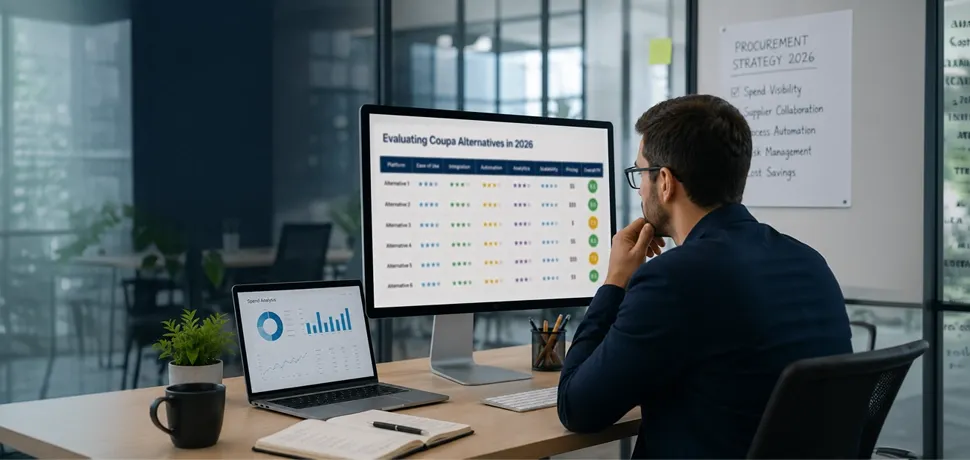
A quick reference across all six platforms — not a definitive ranking, but a fast way to see where each one fits.
| Platform | Best For | Deployment Speed | Ease of Use | Price Point |
|---|---|---|---|---|
| Ivalua | Global manufacturing enterprises | Moderate | Requires training | Premium |
| SAP Ariba | SAP-invested multinationals | Slow | Complex | High TCO |
| GEP | Regulatory-complex enterprises | Fast | Intuitive | Mid–High |
| Zycus | Tail spend reduction focus | Moderate–Fast | Simple intake | Mid |
| Zip | Fast-growth intake problems | Very Fast | Very Easy | Mid |
| ProcureKey | Lean teams, full sourcing cycle | Days | Native M365 | Accessible |
ProcureKey is the only platform here combining same-week deployment, native Microsoft 365 integration, AI-assisted sourcing, and live eAuction management under one accessible pricing model.
How to Choose the Right Platform
Start With the Problem, Not the Feature List
The easiest way to choose the wrong platform is to evaluate features before diagnosing the actual bottleneck. If employees bypass procurement entirely, a complex sourcing suite will not fix that. If the problem is poor supplier competition on high-value categories, a simple intake tool will not fix that either. Map the problem first.
Be Honest About Internal Capacity
Every platform on this list will work given the right team, budget, and timeline. Highly configurable platforms require dedicated administrative capacity. If your procurement team is lean, the overhead of managing a complex system can quietly outweigh what it provides.
Weight Time-to-Value Seriously
A platform that takes 18 months to go live costs more than its licensing fee suggests. Every month without a working system is a month of uncontrolled spend. Platforms that deploy in days and deliver measurable results in weeks often deliver more total value than feature-rich alternatives that take years to fully operate.
Conclusion
The right platform is the one your team will actually use. Evaluate carefully, weight deployment speed seriously, and test what governance looks like at your scale before you commit.